
Pico at Shoreditch Design Festival
Last week I (Phoebe) was at the Shoreditch Design Week, (part of London Design Festival), where the British Council and University of Arts London were showcasing the New Landscapes projects at Material Matters - a leading international platform advancing material intelligence across architecture and design. This included a stand of our ongoing research work towards creating compostable underwear and working with desi cotton.
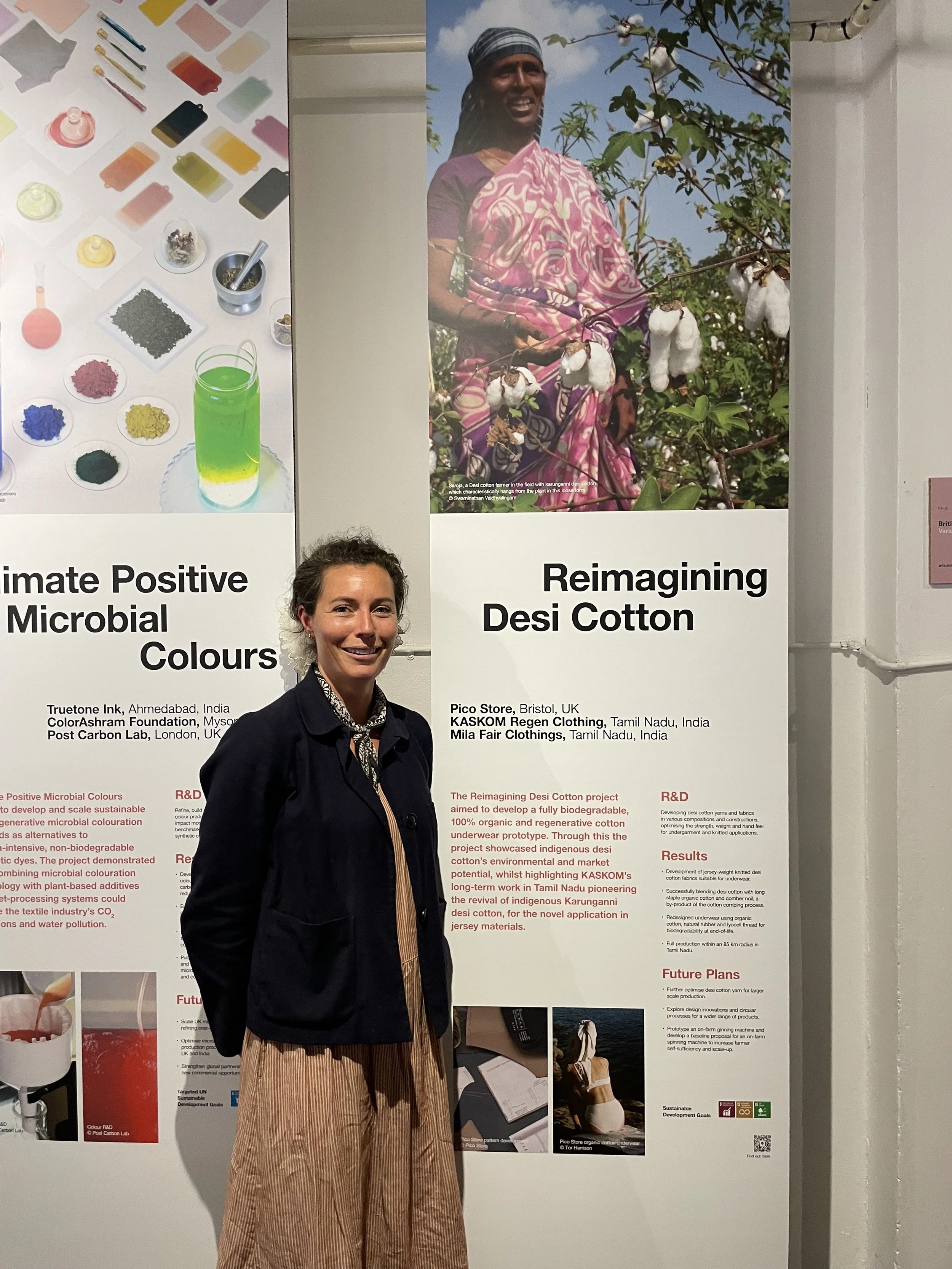
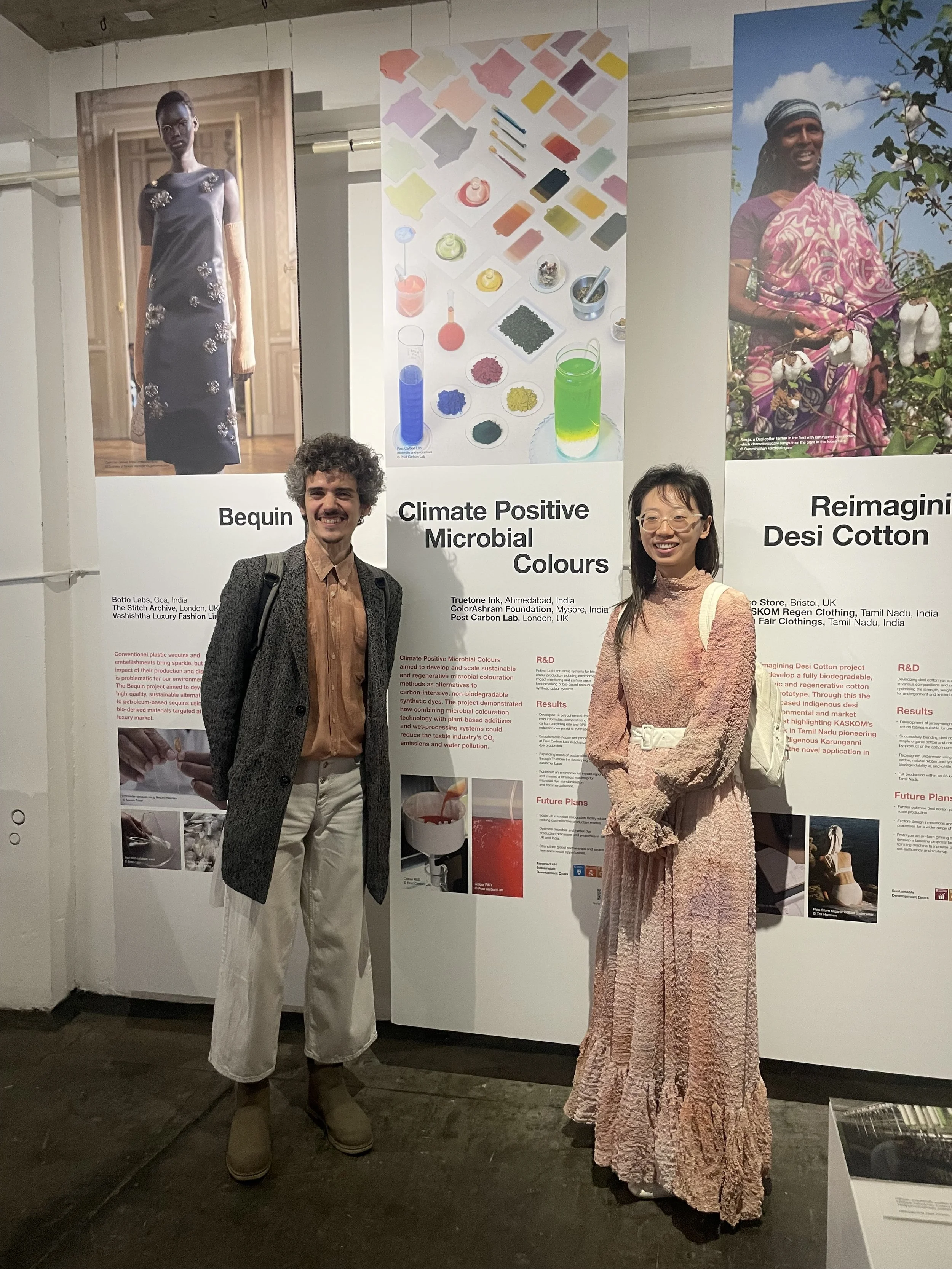
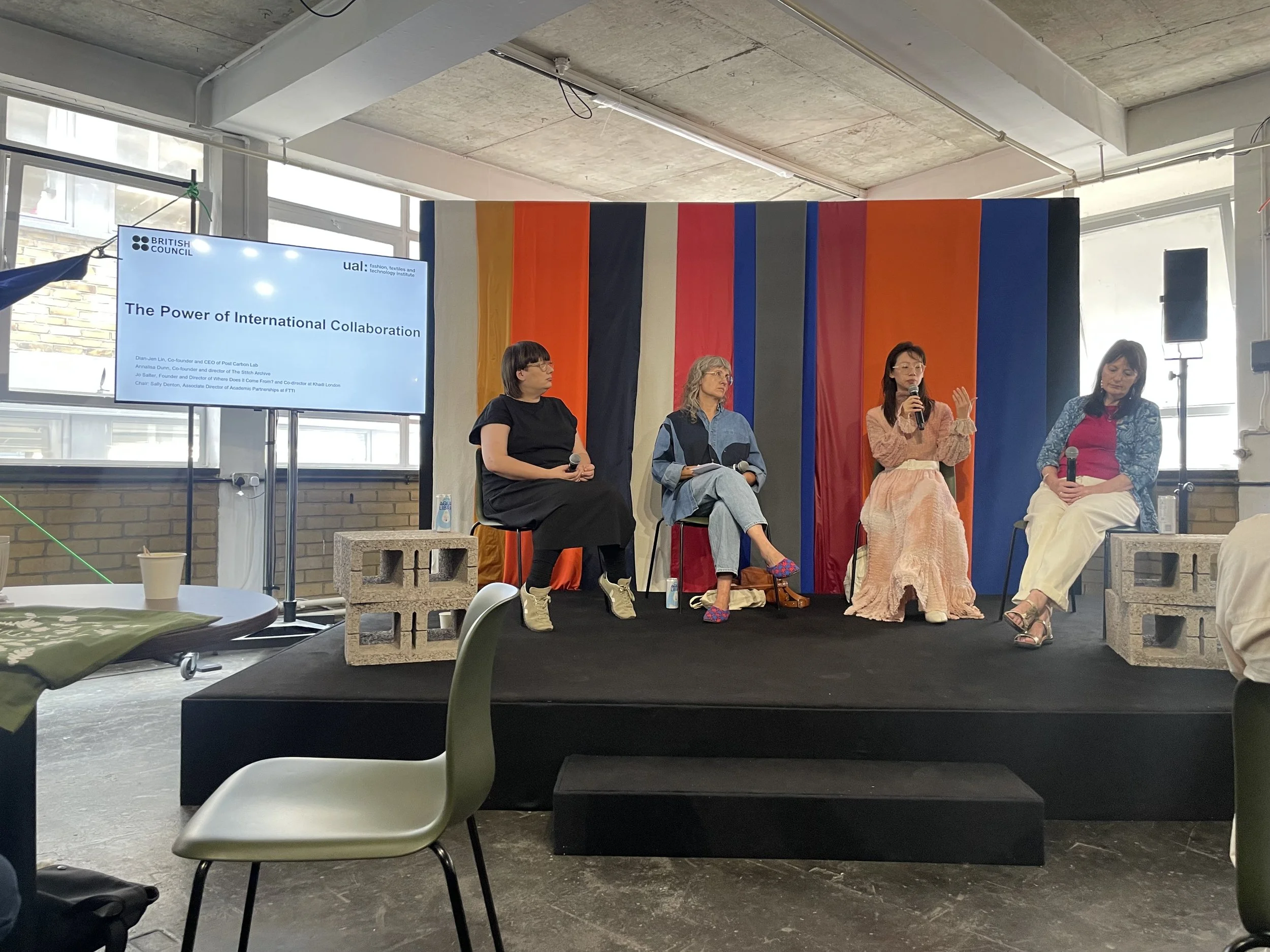
It was great to catch up with the other New Landscapes teams and hear how everyone’s projects have evolved since we were last together, from new clusters being formed with Circular Handspun to EU Horizon grants achieved by DJ and Juan from Post Carbon Lab . What feels exciting is that there is lots of potential for future collaboration between us all. Part of the day’s event was a panel about International Collaboration where some of the New Landscapes shared their experiences. As we are all small SME’s the power of collaboration feels so evident, as well as the reciprocal benefits of shared knowledge and expertise. When we began 10 years ago I was nervous of working so far afield but we have managed to build close relationships with people we partner and collaborate with and this feels key.
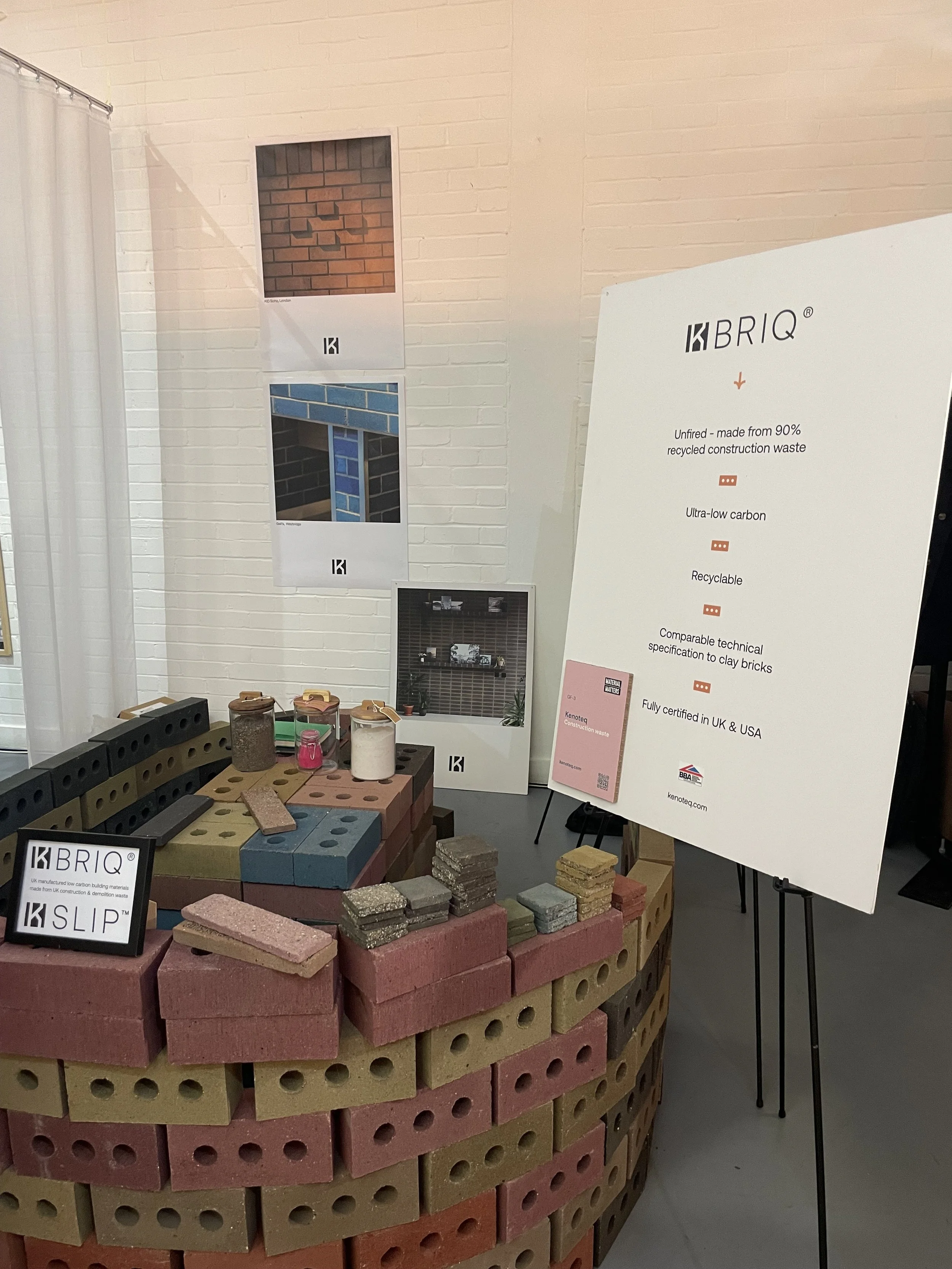
I felt both inspired and hopeful seeing so many incredible materials being showcased across the show, such as materials from bacterial celullose on coconut waste (Malai Biomaterials) foam from biochar (carboncell) and materials from waste textiles often dumped on Ghana’s coastline by the West (the Or Foundation). Some pieces really felt like they mirrored the philosophy we so often witnessed in India, like the (Briq) bricks made from construction waste. This took me back to our time visiting waste dye units in Tamil Nadu where 95% of the dye water was recycled back to drinking water, the pools having been used as solar panels to power this process, whilst 5% remained to be turned back into building materials.
I came away having had lots of great conversations around our project too, with lots of questions around why desi cotton isn’t used so much anymore, why it’s more regenerative than organic cotton and what bioelastane alternatives were available on the market at the moment and the limitations around them.
It was great to see Margent Farm there too - we have admired for a long time and nearly collaborated on project a few years back, who knows maybe we will again. They are using hemp in so many guises, as a replacement for corrugated iron, concrete, textiles… you name it. They have a whole house primarily built out of the incredible fibre on the farm. I remember reading this summer, that in all the drought and heat we had in the UK hemp was still thriving, 12ft tall, it’s such a resilient and adaptable plant.
I could go on but I will leave on this thought… Maybe a lot of these materials are a reaction to what can seem like a scary state of the world, and a desperate need to protect the planet and its people and resources. But, maybe, as in India, when they created solar panels from dye water in response to a lack of regulation on waste dye water (we heard stories from farmers that their potatoes were turning blue from leaked dye waste and making people sick), we can manifest a future where all materials we encounter are derived from waste or regenerative materials. The next step as always is more regulation, and more support to get these materials in more homes, and on more bodies.
I also left feeling very grateful to the British Council and University of Arts London for getting our work in front of so many people, amongst such inspiring researchers and innovators, at exhibits in London, South Korea and India. We look forward to continuing our work to produce compostable underwear from regenerative and local supply chains. More soon.
Phoebe